Let's find out more
Mature skin with spots
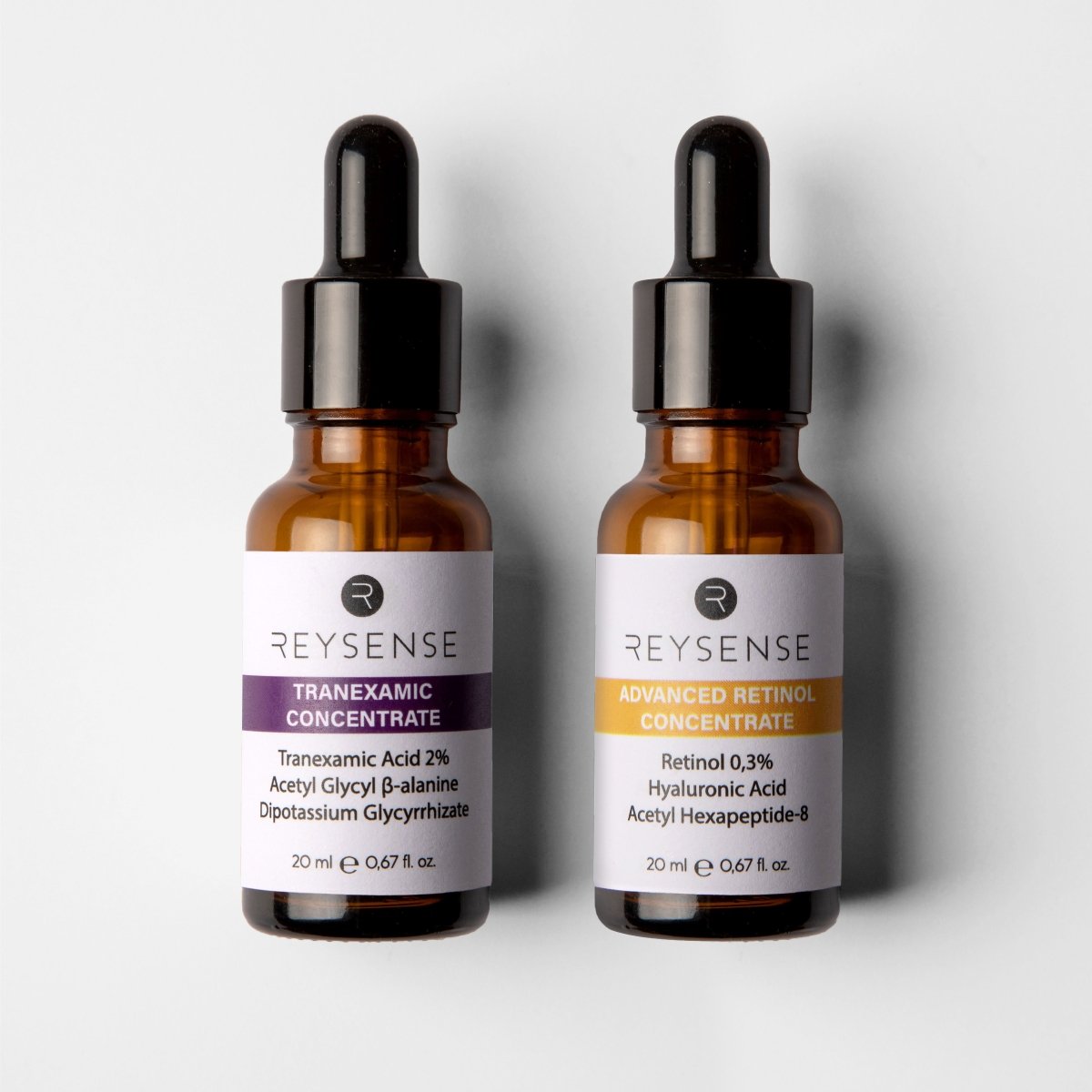
Skin aging may be caused by both intrinsic and extrinsic factors, and among these, hyperpigmentation, known as maturational dyschromia, is the most common condition. Numerous studies have demonstrated how topical application of depigmenting agents can help prevent and treat these conditions: among the most common is tranexamic acid (TA). TA is an inhibitor of melanogenesis because it interferes with the interaction between melanocytes and keratinocytes by inhibiting the plasmin system; this leads to a decrease in the production of prostaglandins responsible for stimulating tyrosinase activity.
What do the studies show?
Studies have shown that Tranexamic Acid at concentrations between 2-3% is effective in treating hyperpigmentation. Some studies have shown that when used at a 2% concentration in combination with other active ingredients, it improves skin discoloration compared to its use alone.
Skin aging and hyperpigmentation can be treated with other active ingredients, including retinol, which influences the keratinization process of the epidermis, improves the structure of the stratum corneum, and reduces transepidermal water loss. It also significantly improves mature skin by brightening hyperpigmentation and reducing the signs of photoaging.
Retinol stimulates cell growth and differentiation: it induces epidermal thickening and a decrease in TEWL (transepidermal water loss—the continuous evaporation of water through the outer layers of the epidermis), promoting skin hydration. Studies have demonstrated a strong anti-aging effect when combined with other active ingredients.
Studies have shown that retinol derivatives, in a specific combination of concentrations, can improve visible wrinkles and skin elasticity. They also promote skin softness and hydration.